Astronauts successfully grow zinnia flowers on the International Space Station
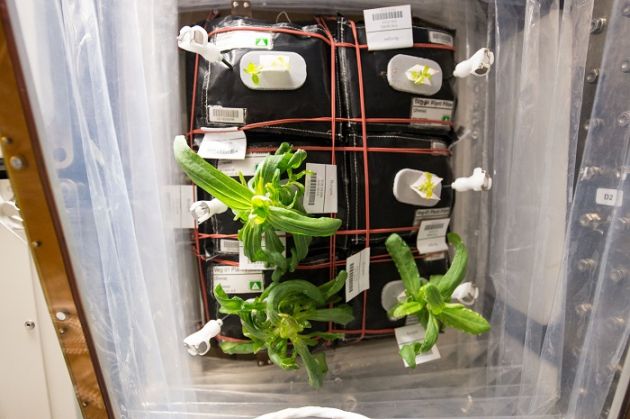
The astronauts stationed at the International Space Station can now stop and smell the flowers as zinnias are reportedly blooming in outer space.
NASA appears to have another success on its hands as its Vegetable Production System project, aka Veggie, is now growing zinnias. According to the Space website, the space agency's latest Veggie experiment started on Nov. 16 when astronaut Kjell Lindgren activated the system to test if it's possible to grow flowers in outer space. The astronauts used the same technology that was used to grow red romaine lettuce.
In a statement, NASA explained that while the flowers might not add fresh produce to the astronauts' diet, the experiment will help scientists know more about how a flower's growth is affected in space. This in turn will help scientists in determining what other plants can be grown in outer space.
The Veggie facility is an inexpensive chamber that's used to grow plants on the ISS. It provides the lighting, nutrients and planting "pillows" for the plant's roots. The experiment of growing a flowering plant actually has two-fold benefits. Aside from giving astronauts a hobby on their extended missions, the plants grown can also be used for further research and can also be used as fresh food supply.
The Vegetable Production System project was first installed in March 2013 and is scheduled to be returned to Earth in March 2016. The facility was originally designed to grow lettuce for the astronauts to eat but the blooming of the zinnia flowers emphasizes the project's importance as it proves its versatility. It also gives scientists more information on how to cultivate flowering plants in microgravity, which is essential if they want to be able to grow edible flowering plants like tomatoes.
Ultimately, Veggie's success in growing both romaine lettuce and zinnias will lay the foundation for future exploration. If humans are to succeed in colonizing another planets, being able to grow food in space is a definite must.