Apple Watch Vs Microsoft Band: No phone calls from the Band but great features, better price and battery life
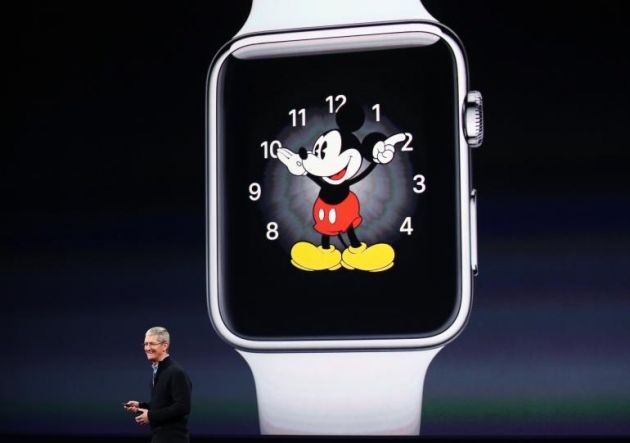
Apple Inc. is set to soon launch the Apple Watch and no one really knows what kind of consumer response the product will generate. On the other hand, Microsoft's Band smartwatch has been an unexpected hit, with the product always remaining out of stock in Microsoft Stores and available only for consumers enrolled in the waiting lists.
A month before Apple is expected to begin shipping the Apple Watch, Microsoft is ramping up production and distribution of its Band smartwatch, which will now be also sold at retailers Best Buy (BBY), Amazon.com (AMZN) and Target (TGT), and also made available in the United Kingdom.
Despite the Microsoft Band being more of a fitness tracker and the Apple Watch purely a smartwatch, their unique features guarantee a tough fight in the market between the two wearables. We compare Microsoft's Band smartwatch and the Apple Watch to help you decide which one should finally end up on your wrist.
Design: The Microsoft Band is made of a thermal plastic elastomer material and comes only in black without offering interchangeability, while the Apple Watch has a machined aluminum rectangle shaped body with curbed edges in as many as 38 different designs in terms of color, cases and band materials, including leather and stainless steel.
Display: The Microsoft Band features a rectangular screen 1.4-inch TFT (320 x 106 pixels) full color display with ambient light sensor, as against AMOLED Retina touch display with high pixel density in the Apple Watch.
Software: The Microsoft Band has a simple, platform-agnostic operating system with a wearable architecture that has been optimized for low-power micro-devices. The Band is compatible with all operating systems and works with iOS 7.1, iOS 8, Windows Phones 8.1 and Android 4.3-4.4 devices through Bluetooth. The Apple Watch runs on the latest iOS 8.2 and connects only with iOS mobile devices, and only iPhone 5 or later running on iOS 8.2 through Bluetooth 4.0.
Apps: The Microsoft Band has various sensors to monitor fitness activity, such as optical heart rate sensor, accelerometer and gyroscope, gyrometer, GPS, ambient light sensor, skin temperature sensor, UV sensor, capacitive sensor, galvanic skin response monitor and microphone. It also has productivity features like Email, weather, notifications, timer, stopwatch, caller ID, Twitter, Facebook Messenger and Calendar. The Apple Watch has only an accelerometer, gyroscope, heart rate sensor and barometer, but its interchangeable face feature allows users to add any data to their watch face.
Functionality: The Microsoft Band has critical smartwatch functionality, including the ability to send and receive text messages, while the Apple Watch allows wearers to send and receive text messages, as well as take phone calls directly from their wrist.
Battery: The Microsoft Band's battery lasts up to two days with one charge, while the Apple Watch lasts only for 18 hours and will have to be recharged every day.
Price: The Microsoft band sells for $199 for all sizes, while the Apple Watch has a price ranging from $349 to $17,000 depending upon the model and size.