Catholicism tends to lose more people to religious switching than Protestants, survey shows
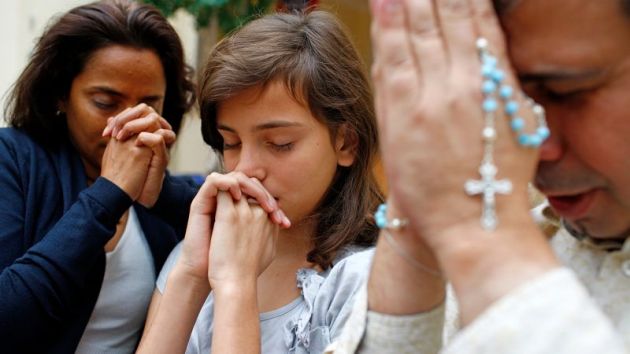
Religious switching within Christianity has affected the two largest subgroups – Catholicism and Protestantism – differently, with Catholics tending to lose more than Protestants, Pew Research reports.
Christianity has experienced some of the largest losses from religious switching of any faith group around the world, according to Pew's 2024 surveys.
Religious switching refers to people identifying with a different religion in adulthood than the one in which they were raised.
According to Pew on April 23, Catholicism has lost more people than it gained in nearly all countries surveyed.
Protestantism has seen a net gain from switching in nearly as many places as it has seen a net loss.
Pew analysed religious switching into, out of, and between Catholicism and Protestantism, based done in 24 countries.
Religious switching, according to Pew, refers to a change between the religious group in which a person says they were raised (during their childhood) and their religious identity now (in adulthood).
The researcher uses the term religious switching instead of "conversion."
That is because the changes can take many forms – from having been raised in a religion to being unaffiliated – and may not involve a formal initiation process.
In 12 of the 24 surveyed countries, most of the population was raised Catholic.
Those distributions range from 59 percent of adults in Hungary to 96 percent in Poland, while many adults who were raised Catholic there still identify with the faith today.
For example, 92 percent of all Polish adults are lifelong Catholics.
But other adults have left the church. Former Catholics (i.e., people who were raised Catholic but no longer identify as such as adults) make up 10 percent or more of the total population in 15 countries.
And relatively few adults in the countries analyzed enter the church after being raised in another religion or with no religion.
MORE CATHOLICS LEFT THAN JOINED
In most countries, more people have left Catholicism since childhood than joined.
In Italy, for instance, 22 per cent of all adults say they were raised Catholic and no longer identify as such, while 1 per cent were not raised Catholic but have since joined the religion.
This results in a net loss of 21 percentage points in the Catholic population in Italy due to religious switching.
Overall, more people left Catholicism than joined it in 21 of the 24 countries Pew analyzed.
Hungary is the only country surveyed where more people joined (5 percent) than left the church (2 percent).
In the remaining two countries – Kenya and South Korea – similar shares entered and exited Catholicism through switching.
People who leave Catholicism tend to join Protestantism or disaffiliate from religion altogether according to Pew.
Disaffiliation is especially common in parts of Europe and Latin America.
That includes Chile, where 19 percent of all adults are former Catholics who now identify as atheist, agnostic or "nothing in particular."
But in Kenya, Brazil, Ghana, Nigeria and the Philippines, former Catholics are more likely to have joined Protestantism than to have become religious "nones.
As with Catholics, former Protestants are a sizable share of the population in many countries around the world.
In nine of the 24 countries Pew analyzed, this group makes up 10 percent or more of the population.
But unlike with Catholicism, there are several countries where more people have joined Protestantism than have left it.
Pew noted that Protestantism has seen a net gain from switching in nearly as many places as it has seen a net loss.
Most of the countries where Protestantism has had net gains are in Latin America.
For example, more Brazilians have joined Protestantism after being raised outside the faith (15 percent) than have left Protestantism (6 percent).
That has resulted in a 9-point net gain through switching.
Most Brazilians who have switched to Protestantism are former Catholics.
At the same time, Sweden, the United Kingdom and Germany are among the countries with the largest net losses.
Adults who leave Protestantism tend to become religiously unaffiliated. For example, 15 percent of Australians are former Protestants who now identify with no religion; few are now Catholics (1 percent) or members of other religions (percent).
Pew noted that 96 percent of the Polish population was raised Catholic, with 92 percent still identifying as such in adulthood.
The Philippines, where percent are raised Catholic, has also seen a high adult retention rate, with 78 percent of the country's adults still regarding themselves as Catholic.
In Hungary, 57 percent of adults identify as Catholic, with 59 percent of the population having been raised Catholic.
Italy has experienced higher losses, with 89 percent of its adults raised Catholic, and 67 percent of them identifying as such.
In Mexico, 66 percent of adults regard themselves as Catholic, although 87 percent of the nation's population is raised in the faith.
In Peru, where 81% are raised Catholic, 63 percent of adults still identify with Catholicism.
Spain has 80 percent of its population raised Catholic, but just 45 percent of adults identify as such, while in France, with 60 percent raised Catholic, only 34 percent of adults identify with the faith.
In the United States less than one third (30 percent) are raised as Catholic, and only 17 percent of adults say they are Catholic.
In Canada 39 percent are raised as Catholics and 20 percent of adults describe themselves as such.