World churches body, Korean prime minister, seek new paths for dialogue and peace on Korean Peninsula
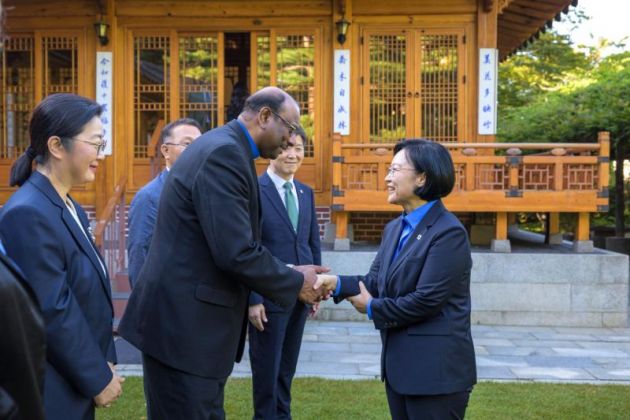
World Council of Churches general secretary Rev. Jerry Pillay has met with South Korean Prime Minister Han Seongsook in Seoul, where they discussed ways churches and the wider ecumenical movement could help reopen pathways for dialogue and peace on the Korean Peninsula.
The meeting was on Sept 11 in Seoul and took place during the 2026 International Ecumenical Peace Convocation, held in the South Korean capital From Sept. 9-13 September and jointly organized by the WCC, the Christian Conference of Asia, and National Council of Churches in Korea (NCCK).
"We will not give up our efforts for peace and reconciliation," Pillay said, the WCC said in a release.
Rather than beginning with politically difficult questions of reconciliation or reunification, Pillay suggested that renewed engagement might first be built around practical areas of common concern, including climate change, humanitarian and social needs, and other forms of diaconal cooperation.
The Korean conflict is an ongoing conflict based on the division of Korea between North Korea (Democratic People's Republic of Korea) and South Korea (Republic of Korea).
During the Cold War, North Korea was backed by the Soviet Union, China, and other communist allies, while South Korea was backed by the United States, United Kingdom, and other Western allies.
Discussions focused particularly on the current absence of effective channels for inter-Korean dialogue and on the potential role of churches in creating spaces where contact and trust might gradually be rebuilt.
Pillay emphasized the WCC's longstanding commitment to peace on the Korean Peninsula and its close cooperation with the NCCK and churches in the region.
He recalled the significance of the 1986 Glion consultation, when Christians from North and South Korea met through the WCC, noting that its 40th anniversary offers both a reminder of what has been possible and an encouragement not to abandon dialogue in the present difficult circumstances
"We will not give up our efforts for peace and reconciliation," Pillay said.
Rather than beginning with politically difficult questions of reconciliation or reunification, Pillay suggested that renewed engagement might first be built around practical areas of common concern, including climate change, humanitarian and social needs, and other forms of diaconal cooperation.
Prime Minister Han welcomed this gradual approach, stressing that dialogue cannot simply be restored by declaring reconciliation as an immediate goal.
Beginning instead with practical issues affecting people's daily lives could provide a more realistic first step toward rebuilding contact and confidence
Pillay was joined by Peter Prove, director of the WCC Commission of the Churches on International Affairs; Rev Jung Eun Grace Moon, general secretary of the Christian Conference of Asia; Rev. Park Seung Ryoul, general secretary of the NCCK; the Hon. Melissa Parke, executive director of the International Campaign to Abolish Nuclear Weapons; and other ecumenical partners.
Discussions focused particularly on the current absence of effective channels for inter-Korean dialogue and on the potential role of churches in creating spaces where contact and trust might gradually be rebuilt.