California's 'The Big One' news: Two fault lines may trigger bigger earthquake
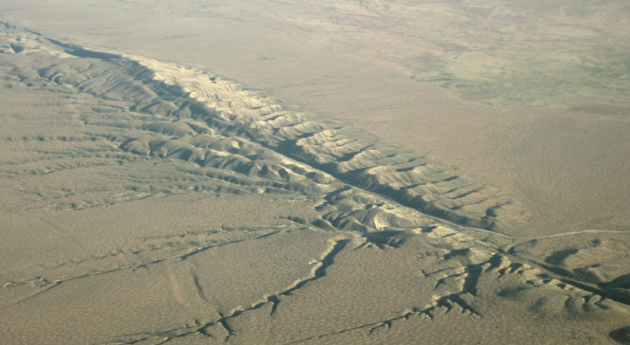
In 2004, the San Andreas Fault once again became a big name after it produced a magnitude 6.0 earthquake in the Parkfield area and recently, a new study revealed that "The Big One" may happen soon as two other fault lines in the area are feared to possibly trigger another massive earthquake.
According to CNN, a new study revealed that the San Jacinto fault can possibly rupture at the same time with the San Andreas, which can bring about huge losses in damages and lives. Julian Lozos, an assistant professor of Geological Sciences at the University of California said, "If there's a joint rupture it will create a larger earthquake, especially if it starts on the San Jacinto."
Lozos further explained that the faults work just like humans do when stressed. If someone is stressed out and eventually snaps, that person may trigger another to get stressed. "That's the same way faults work. They stress each other out," he said.
Multiple reports stated earlier that the southern part of California has long been overdue for a massive earthquake related to the San Andreas Fault. While the most devastating quake brought about by the fault occurred in 1812, the next earthquake, if indeed triggered by two fault lines erupting at the exact same time, is expected to cause extensive damage and might reach nearby areas.
Another fault line feared to possibly cause more damage than previous phenomena is the Cascadia subduction zone. It is buried inside the Earth and is said to cause an earthquake with a magnitude, which is 30 times stronger and more damaging than the famed San Andreas that geologists fear may once again bring chaos.
Infrastructure in Southern California have been built to ensure the safety of people and other facilities. However, the experts are warning people to take the possibility of a joint rupture seriously since the buildings weren't created for ruptures that will occur simultaneously.