Ebola outbreak in Democratic Republic of Congo, Uganda deeply concerns world churches' body
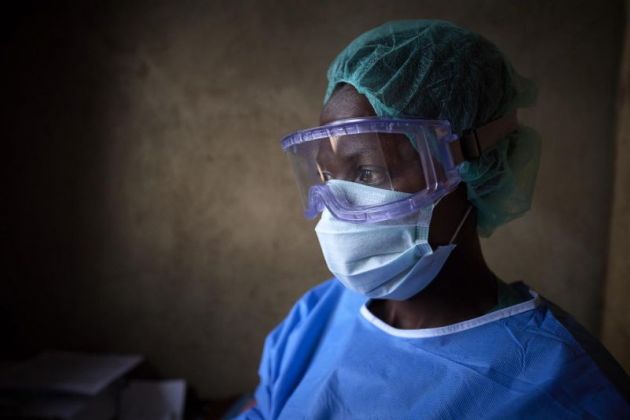
World Council of Churches general secretary Rev. Jerry Pillay has expressed deep concern over the suffering caused by the escalating Ebola outbreak in the Democratic Republic of Congo and Uganda.
The outbreak comes during the annual World Health Assembly, the decision-making body of the World Health Organisation (WHO), which the United States and Argentina have quit, while one of those afflicted with the disease is an American doctor,.
"This outbreak is unfolding in contexts already burdened by poverty, fragile health systems, food insecurity, displacement, and the long-term impacts of conflict," said Pillay.
"Such socioeconomic vulnerabilities heighten exposure to disease, limit access to timely care, and undermine the ability of individuals and communities to adopt preventive measures."
At least 100 deaths have been reported in an Ebola outbreak in the Democratic Republic of Congo, with more than 390 cases suspected, the head of the Africa Centres for Disease Control and Prevention has told the BBC.
The WHO had declared this Ebola outbreak a public health emergency of international concern, with hundreds of suspected infections and many deaths reported.
Pillay affirmed that church and community leaders have a vital role as trusted neighbors: to stay alert, to follow and disseminate accurate public health guidance, and to counter misinformation with clear, compassionate, and trustworthy information that protects life.
"We call on governments, international agencies, churches, and civil society to cooperate across borders, to share treatments, technologies, and financial resources so that the most affected communities are not left behind, and to ensure safe and unhindered access for health workers and humanitarian actors," said Pillay.
"We note with grave concern that, according to the WHO, there is currently no approved vaccine or therapeutics for the Bundibugyo strain of Ebola driving this outbreak."
The Seventy-ninth World Health Assembly is being held in Geneva, Switzerland, on May 18–23.
Pillay urged all parties to ongoing conflicts in the region to agree to an immediate cessation of hostilities, to respect international humanitarian law, and to create secure corridors for medical response, community education, and care.
There are also two confirmed cases and one death in Uganda, says the U.S. Centers for Disease Control and Prevention (CDC).
The WHO said the current strain of Ebola is caused by the Bundibugyo virus.
An American doctor in the DR Congo is among those with a confirmed case, the medical missionary group they were working with and the CDC has said.
"The WCC calls on communities worldwide to accompany the most vulnerable—the sick and their families, health workers, displaced people, women and children at risk, and communities already scarred by violence and poverty—through persistent prayer, courageous advocacy, and concrete acts of solidarity," said Pillay.
"In this shared global responsibility, we reaffirm that solidarity must extend beyond emergency response to addressing the root causes of vulnerability, including inequality, marginalization, and lack of access to essential services, so that communities are better protected against future health crises."