US religious freedom body says India's religious freedom on 'downward trajectory'
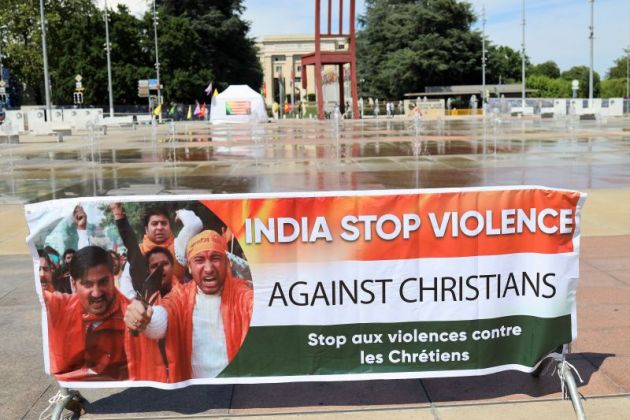
Religious freedom in India is on a "downward trajectory," says a U.S. commission that has heard renewed warnings about discrimination, arbitrary detention and violence directed against Christians and other religious minorities.
At a May 7 hearing on Capitol Hill, members of the U.S. Commission on International Religious Freedom said India's national and state-level policies were contributing to an increasingly hostile environment for minority communities, The Catholic Herald reported.
The discussion focused in particular on anti-conversion laws, attacks on places of worship, pressure on clergy and the failure of local authorities to prevent or punish anti-minority violence in the world's most populous nation.
USCIRF vice-chair Asif Mahmood described religious freedom in India as "abysmal."
He said that minority communities and their religious sites remain vulnerable to harassment, surveillance and discriminatory legislation.
Mahmood noted that members of the clergy are routinely arrested on accusations of forced conversion and later released.
Testimony given highlighted a widening gap between India's democratic self-presentation and the experiences described by religious freedom advocates, the Herald commented.
For Christians in particular, the concern is not simply one of isolated incidents, but of an atmosphere in which legal pressure, social hostility and periodic violence increasingly work together to narrow the space for public religious life.
Back on Feb. 6, the USCIRF called on the U.S. government to urge Indian officials to hold perpetrators of targeted violence accountable for attacks against religious minorities.
It reported that over "the past couple of months," violent attacks by Hindu nationalist mobs targeting Christians had escalated.
In its 2025 Annual Report, USCIRF recommended that the U.S. Department of State designate India as a Country of Particular Concern (CPC) for its systematic, ongoing, and egregious religious freedom violations.
In November 2025, USCIRF had released an issue update on systematic religious persecution in India.
During the Capitol Hill hearing, the former U.S. ambassador-at-large for global criminal justice, Stephen Rapp, called for more robust pressure on the Indian government.
These include efforts to document violations in ways that could support future international prosecutions.
The Herald reported that religious freedom advocate David Curry said human rights and religious liberty should be treated as essential parts of diplomatic engagement rather than peripheral concerns.