Media gender equality stalled 30 years after Beijing, says Christian communication group
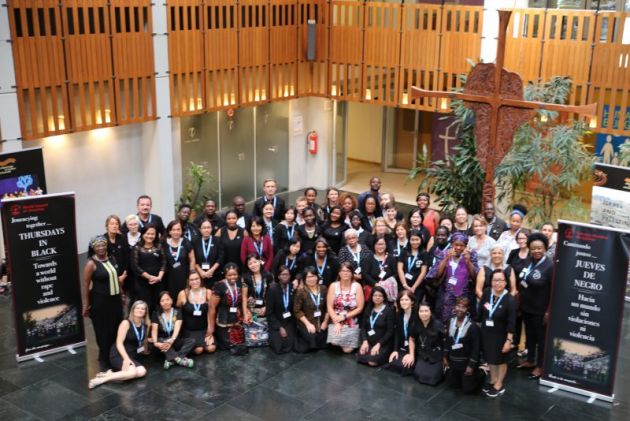
Gender equality has stalled since it came under intense scrutiny 30 years ago at a major international gathering, the latest Global Media Monitoring Project has found.
The findings were released on Sept. 4, said the World Association for Christian Communication, the coordinator of the Global Media Monitoring Project Network dialogue, "Half the world, a quarter of the news."
"Media is one of most powerful forces shaping public discourse, democracy, and accountability," said Sara Speicher, World Association for Christian Communication deputy general secretary.
"When women are absent, democracy is incomplete and public discourse distorted. Without women's voices, there is no full story, no fair democracy, and no shared future."
Closing the launch event, Speicher commended the committed gender justice activists around the world—and gave a call to action.
The event was cohosted with UN Women and the United Nations Correspondents Association in New York.
Conducted every five years for the past 30 years, the Global Media Monitoring Project surveys how women are represented, portrayed, and engaged as subjects, sources, and reporters, in comparison to men.
The findings reveal the extent to which women have power, voice, and visibility in global media – and where advocacy is needed to advance democracy, equality, and accountability.
The Global Media Monitoring Project 2025 findings come as the world is marking 30 years since the adoption of the Beijing Declaration and Platform for Action at the Fourth World Conference on Women.
- WOMEN ONLY 26 PERCENT SEEN
Key findings reveal that progress towards gender equality in the news media is flatlining, with women only 26 percent of the people seen, heard, or spoken about in print and broadcast news – a percentage that has only risen 2 points in the last 15 years.
Despite its prominence in the lives of 50 percent of the population, gender-based violence is featured in less than two out of every 100 news articles worldwide.
The report also revealed that women's participation as sources continues to be primarily in ordinary roles, as popular opinion providers and interviewees giving eyewitness accounts.
The Beijing Platform demanded non-stereotyped portrayals, reinforced by the recent Pact for the Future (2024) which requires action to dismantle barriers for women and girls.
In 2025, the report notes that gender stereotypes are more entrenched than they ever were over the past 30 years.
The UN General Assembly opening next Tuesday will examine progress on the Beijing Platform and launch a new Beijing Action Agenda, according to Kalliopi Mingeirou, chief of the Ending Violence against Women and Girls Section at UN Women.
She pointed to the global project's 2025 key findings as a "wake-up call and a roadmap" for action, flagging where "progress has stalled and renewed effort is needed."
That only one in four people seen and read about in the news is a woman reveals a "gap in democracy," Mingeirou declared.
"All things remaining equal, gender parity in the people seen, heard, or spoken about in the news will not happen until at least 75 years from today, she said. "So, we do need a radical shift."