Tehran church compound faces closure as Iran makes life difficult for Christians
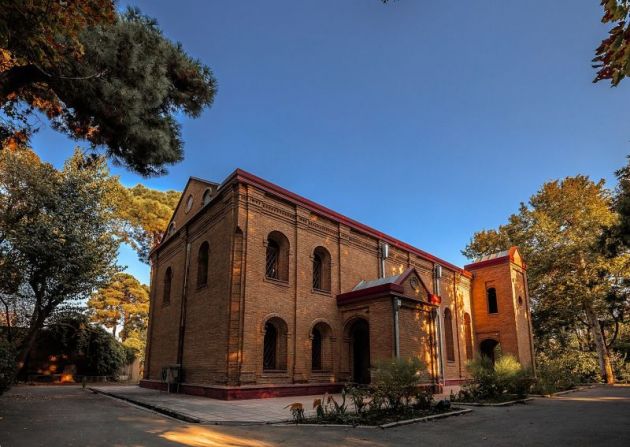
Concerns are growing that the oldest Protestant church in Iran, and its surrounding buildings, may be demolished, after residents were ordered to evacuate by July 11.
Several of the 20 Assyrian and Armenian families who live in the St Peter's church compound in Tehran have already left, while the remaining residents, including two Muslim families, have now received their final warning, according to the Article18 watchdog group.
Article18 is a London-based non-profit organization, committed to the protection and promotion of religious freedom in Iran and advocating on behalf of its persecuted Christians.
The organization says that is the ejection also of the Muslim residents, who had been living in a building belonging to the Bible Society, that has raised fears that the whole complex, including the historic church, may be demolished.
The move comes just a month after an historic church in Mashhad, which like St Peter's belonged to the Presbyterian denomination, was demolished without warning or explanation.
Article18 noted that the targeting of St. Peter's came after a state organisation, the Execution of Imam Khomeini's Order (EIKO), suddenly moved to enforce a court order issued nearly 30 years ago.
A court order, passed by a Revolutionary Court in 1998, had ruled that the entire church compound, which is around 10 acres (4 hectares) in size and includes two schools as well as dozens of homes, should be handed over to EIKO.
The Council of Evangelical Churches of Iran, responsible for St. Peter's, was not aware of the ruling at the time, and unable to contest it until the court order accidentally came to light in 2008.
However, since 1980 the Islamic Republic has repeatedly refused to allow the Council to renew its registration, and closed the case regarding ownership of the property at the direction of the Office of the Supreme Leader, effectively blocking any avenues of appeal.
EIKO was also responsible for the confiscation of the now-demolished church in Mashhad, as well as another Assyrian Presbyterian church in Tabriz, and an Assemblies of God church in Gorgan and retreat centre in Karaj.
The World Council of Churches has expressed its "profound sorrow and deep concern" following the demolition of the Mashhad church the reports about St. Peter's.
The WCC, and called on the Islamic Republic to "immediately halt any actions that could lead to the confiscation, transfer, demolition or repurposing of church properties."
It called on Iran to "cease without delay ... all threats intimidation and legal or administrative pressures directed against church leaders, staff, residents and members of the Evangelical community."
'SUPPORT PROTECTION OF CHURCHES'
The WCC also called on the international community to "engage constructively and urgently in support of the protection of these church properties and the preservation of the religious freedoms and communal life of Christian communities in Iran".
St. Peter's Evangelical Church was founded in 1876, after the then Shah – Naser al-Din Shah Qajar – granted the land to American missionaries.
The church buildings and compound are of inestimable historical significance for the Protestant community, and, being situated in a prized location in central Tehran, the property has great commercial value.
The pressure on St Peter's is the latest example of how Protestant Christianity has been slowly and persistently crushed since the establishment of the Islamic Republic in 1979, and comes more than a decade after the church was forced to stop its Persian-language services in order to prevent Christian converts from attending, according to Article18.
There were once around 50 Protestant churches in Iran – the majority of them from the Presbyterian, Assemblies of God, and Anglican denominations – but today only a dozen are still permitted to operate and must preach in the ethnic minority languages of Assyrian or Armenian,in Persian.
Iranian lawyer and Nobel laureate Shirin Ebadi said the attack on St Peter's is a "continuation of the same policy that has been pursued for years against Iranian Christians, especially Christian converts.
These include closing Persian-language churches, threatening church leaders, arresting converts, prosecuting them under false security-related charges, and gradually eliminating the presence of Christians from the country's public space".
She noted: "The Islamic Republic first considered worship in Persian a threat. Then it closed Persian-speaking churches. Then it prosecuted Christian converts for their faith and worship.
"Now the scope of the pressure has gone beyond converts and has reached historical properties, old churches, and even the places where Armenian and Assyrian citizens live.
"This is the same logic of confiscation: first, citizens are deprived of their obvious rights, then their worship is prohibited, then their homes and churches are taken away, and finally they are evicted from their homes and ancient properties."