Chinese authorities seen putting increasing pressure on Christian leaders who do not comply with state control
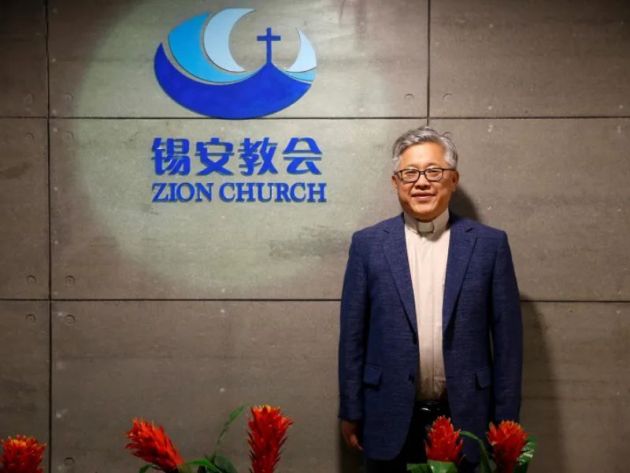
Chinese authorities are increasingly putting pressure on Christian leaders who do not comply with state control.
One instance cited by The Wall Street Journal on March 20 cited the case of nearly 20 people associated with Zion Church, a large, long-running Protestant congregation in Beijing, arrested in October, including its founder, Ezra Jin.
It was said to be part of one of China's largest crackdowns on Christians in years, said the Journal, quoting a Reuters report.
Foreign Policy cited the same case of the Zion Church, saying Chinese police made the opening move in a seismic crackdown on one of the country's largest underground churches.
It noted that Pastor Wang Lin of Zion Church was detained in the middle of the night while travelling to the southern city of Shenzhen.
Other figures in the church, which has dozens of branches across China, went on high alert, frantically trying to figure out what this would mean for their community of around 5,000 members.
- UNAPPROVED INDEPENDENT CHURCHES
Zion Church is among China's independent churches not approved by the ruling Chinese Communist Party and that reject Beijing's authority over their teachings, according to Foreign Policy.
Since 2018, President Xi Jinping has directed a tighter crackdown on unapproved religious practice, especially against certain religions, such as Christianity and Islam, associated by the party with foreign attitudes and beliefs.
The arrests may herald an escalation of persecution.
In the first few hours, it was unclear if Wang was the only one targeted, or whether more arrests would follow.
Grace Jin Drexel, the daughter of prominent Zion Pastor Jin Mingri, watched the events unfold from her home in Washington in the United States, where she received a message to pray for the detained pastor.
She told Foreign Policy: "The next morning, my mom just so happened to be planning to visit me and my family in Washington, D.C. We were talking about when she was going to arrive, but she also told me that she has lost contact with my father."
It is unclear what charges Jin might face, but said that frequently unapproved clergy can be charged with fraud.
Drexel said, "How they [the CCP] levy this fraud charge is that they say that you go around collecting tithe, but you're not seen as a pastor by us, so you are a fraudster. And that is how they justify the fraud charge."
- CHRISTIANITY ARRIVED IN 7TH CENTURY
Christianity in China dates to at least the seventh century, when Nestorian Christian missionaries first reached the country, but it expanded considerably as Western churches targeted the country for conversion beginning in the 19th century.
Christianity was heavily persecuted under Maoism, but it received some relief in the 1980s, when a public keen for new ways of life flocked to churches old and new.
Jin became a Christian after the 1989 Tiananmen Square massacre in Beijing, where he was a student at the time. "He lost faith in the government," Drexel said. "And so, he became a Christian and very quickly started leading in the church."
Within 24 hours of Jin's arrest, numerous pastors were detained across China and transported to the city of Beihai, Guangxi.
"That's when we realized that this was going to be the crackdown," Grace said. "The amount of effort that the state government used to transport all these leaders from across China to Beihai just showcases the level of coordination and intensity."
While some of those rounded up have subsequently been released, many senior figures, including Jin, remain in Chinese custody.
"We have not had any direct communication with those who are detained. Not even phone calls, not even letters. We are only able to talk through lawyers very sporadically," Drexel said.